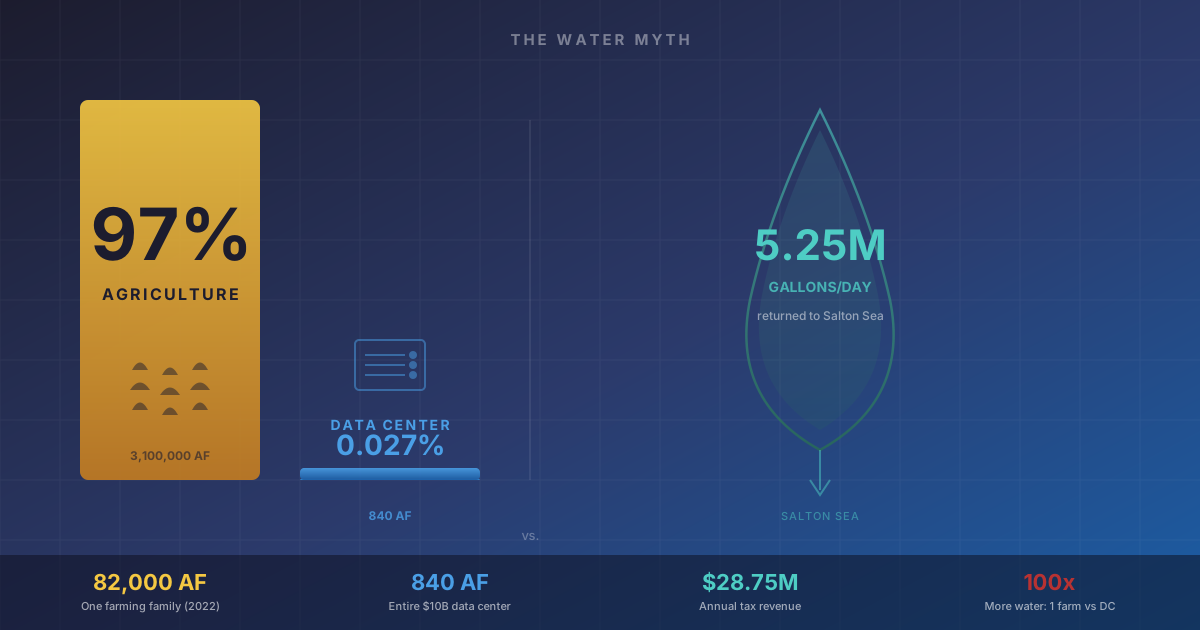
The most important fact about the data center's water plan is also the most misunderstood: the project was designed around recycled municipal wastewater — a "purple pipe" system — not the Colorado River. But the story didn't end there, and being honest about what happened next is the strongest case there is.
The original plan
The IVDC was engineered to run on reclaimed municipal wastewater. Under that plan, the developer agreed to fund upgrades to the cities' treatment plants, pay for the water, and route the cleaned surplus toward the dying Salton Sea. It was designed to take pressure off the region's freshwater supply, not add to it.
What changed
The cities of Imperial and El Centro backed out of the arrangement. With recycled water no longer available, the company turned to the Imperial Irrigation District for a river-water allotment — describing it, in its own lawsuit, as a "last resort." That request is roughly 880 acre-feet a year — about 0.03% of IID's 3.1-million-acre-foot Colorado River entitlement, and less than the 160-acre farm the project would replace. (The developer's plan to offset that use by fallowing the farm is a legal argument currently being litigated.)
Why the source still matters
Opponents treat all water as interchangeable. Utilities don't: potable supply, agricultural irrigation, and reclaimed wastewater are different systems with different rules. The honest takeaway isn't "zero river water forever" — it's that a project built to avoid the river was forced toward it when local officials killed the recycled-water plan that would also have helped the Salton Sea.
The fuller record, with sources, is here: The Salton Sea Betrayal — Water Facts.
Sources: KPBS (June 15, 2026); the recycled-water arrangement, the cities' withdrawal, the "last resort" characterization, and the ~880 acre-feet / ~0.03% figures are drawn from the developer's lawsuit and contemporaneous reporting. Claims drawn from court filings are the parties' allegations.