The phrase “Lithium Valley” has entered the mainstream conversation about Imperial Valley’s economic future. It refers to the enormous geothermal lithium resource beneath the Salton Sea — lithium that could supply a significant fraction of the United States’ battery manufacturing demand if the extraction projects now in development can be completed. The economic, environmental, and geopolitical implications of a domestic lithium supply chain anchored in California have attracted attention from Washington, Sacramento, and the global clean energy investment community.

The phrase “Silicon Valley” needs no introduction. It is the global center of gravity for technology investment, entrepreneurship, and the companies that have defined the digital economy. Its influence is geographic and institutional — a concentration of capital, talent, and infrastructure that has shaped the global technology industry for half a century.

What Imperial Valley has — and what no other region in America currently has at comparable scale — is the natural resource foundation to combine the energy economy of Lithium Valley with the computational infrastructure of Silicon Valley, on an independent grid, in a single coherent geography. This is not a marketing tagline. It is a technical observation about a specific combination of assets that happens to exist in this one place.

The Components

Geothermal generation: already operating, baseload, carbon-free, scalable with additional development. The Salton Sea region has estimated geothermal capacity well beyond what is currently developed. The resource is not going anywhere.

Lithium extraction: in active development by CTR and competitors. Direct lithium extraction from geothermal brine produces battery-grade lithium as a co-product of power generation. If the projects are completed, Imperial Valley becomes a domestic supply anchor for an input that the entire global clean energy transition depends on.

Battery storage: the BESS technology that the IVDC includes is manufactured from lithium. A region that produces lithium domestically, at scale, has obvious economic interest in also being a destination for battery manufacturing and battery storage deployment. The supply chain logic is compelling.

AI compute: the IVDC is the anchor of the compute function. It requires power continuously, at scale, from a reliable source. Geothermal power is that source. IID’s independent grid is the delivery mechanism. The 75-acre I-2 site is the location.

The Flywheel

These components reinforce each other in ways that create economic momentum. A large industrial power customer (the data center) makes additional geothermal investment more financially viable by providing demand certainty. More geothermal development produces more lithium as a byproduct. More domestic lithium supply reduces battery costs. Lower battery costs make large-scale BESS deployments more attractive. More BESS deployments improve grid stability, making more data center development viable. More data center development attracts technology company interest in the region. Technology company presence attracts talent and supporting industries. The flywheel spins.

This is not speculation about a distant future. It is a description of the economic logic that connects assets that already exist in Imperial Valley in various stages of development. What it requires to become a functioning flywheel rather than a collection of unrealized potential is the completion of the first major component — the data center — that creates the demand base that makes everything else more financially viable.

The Stakes

Imperial Valley has been hearing about its potential for a long time. Geothermal energy potential. Lithium Valley potential. Solar development potential. Data center potential. The gap between recognized potential and realized economic development is the most important economic policy question the region faces — and it is a question about institutional capacity, not about natural resources or technical feasibility.

The resources are real. The technology is proven. The capital is available. The project is approved. The court has ruled. What Imperial Valley needs now is for its institutions to honor those approvals and let the community capture the economic future that its natural endowments make possible.

Lithium Valley and Silicon Valley meet in Imperial Valley. The question is whether the Valley will let them.

At some point, the arguments run out and the decision remains. That point has been reached in the dispute over the Imperial Valley Data Center.

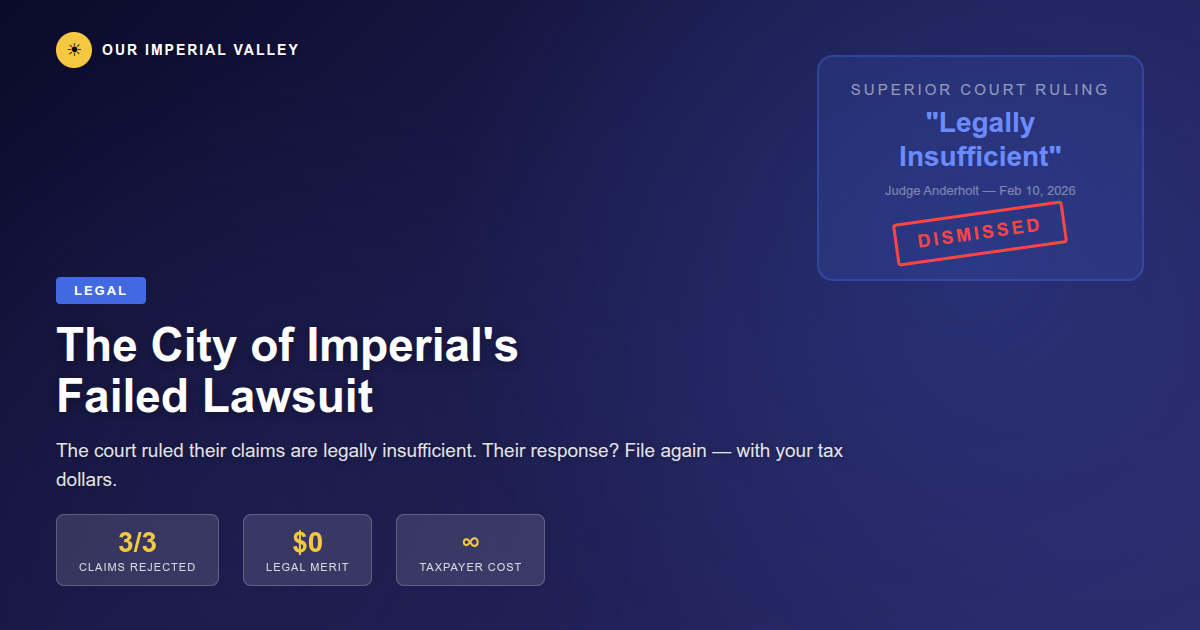
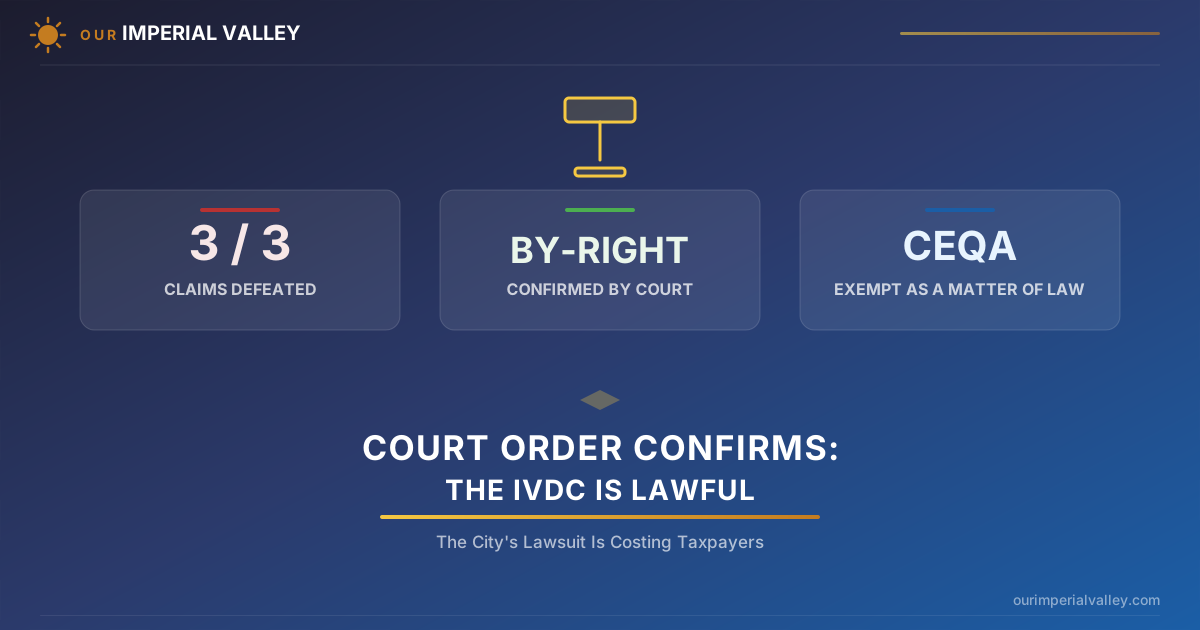
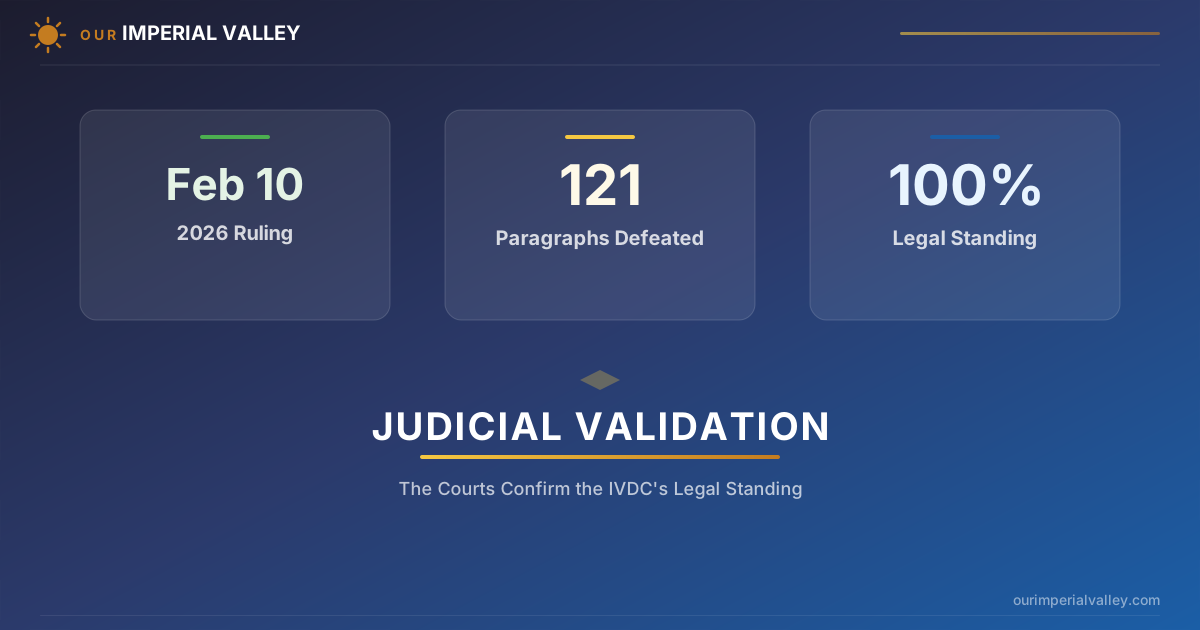
The legal argument has been resolved. The Superior Court ruled the City of Imperial’s complaint legally insufficient — affirming that the project’s ministerial approval was correct and that the attempt to force it into a discretionary review process has no legal foundation. The law has been applied. The outcome is clear.

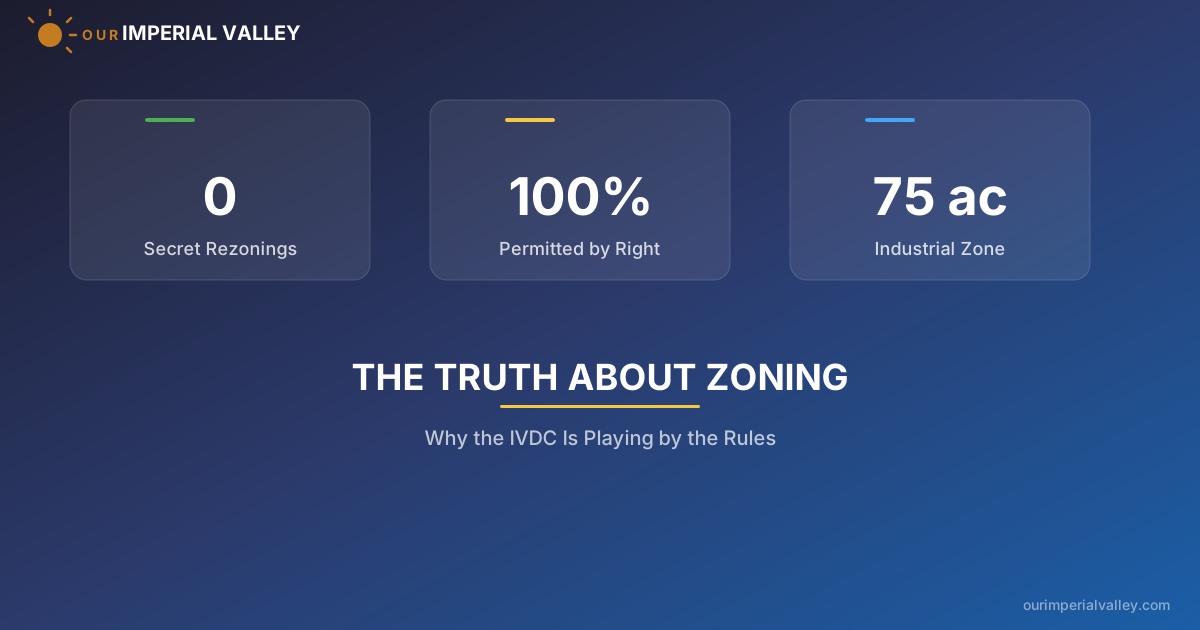
The environmental argument has been resolved by the project’s design. The water consumption concern is addressed by the recycled wastewater system. The grid impact concern is addressed by the dedicated substation and the 862 MWh BESS. The land use concern is addressed by I-2 Heavy Industrial zoning that exists precisely to accommodate facilities of this type.

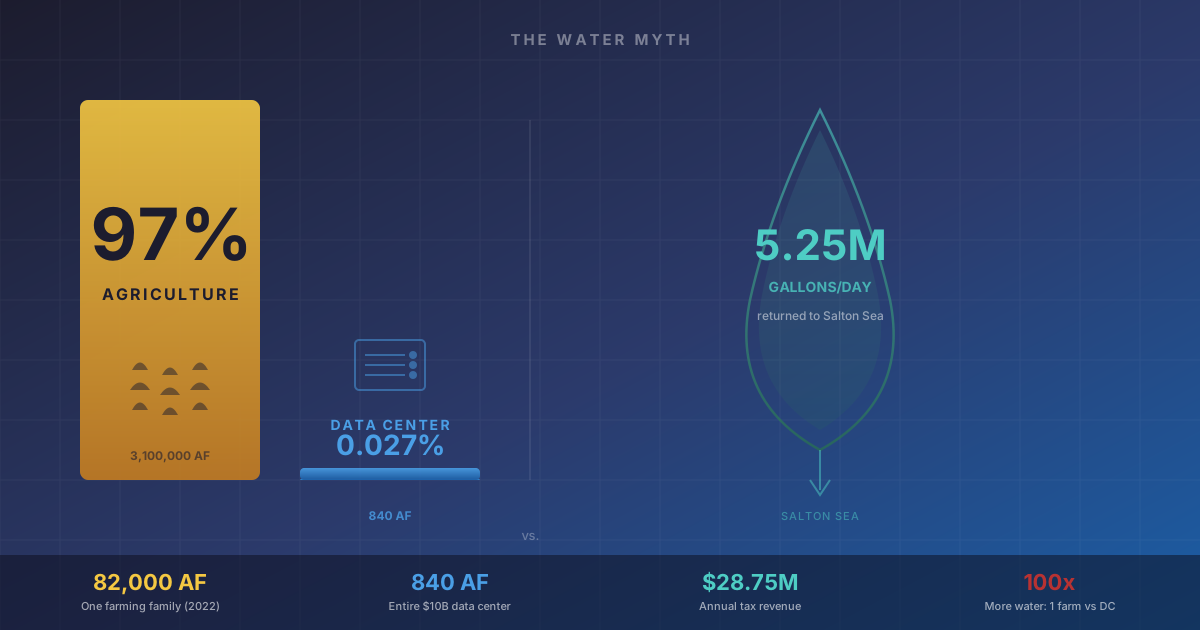
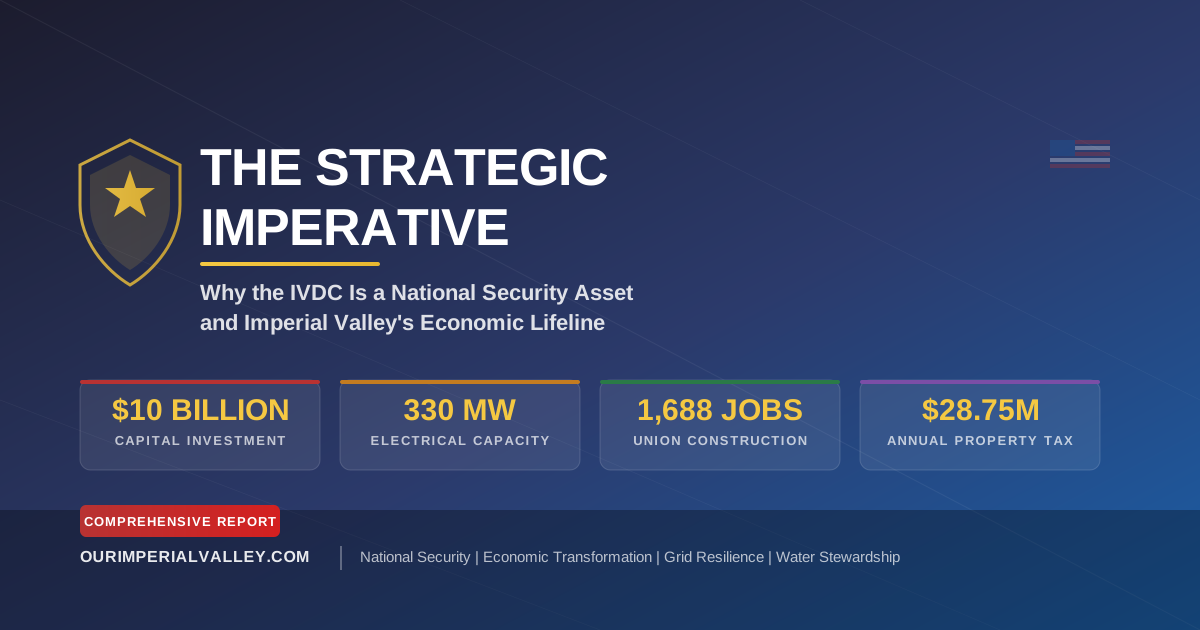
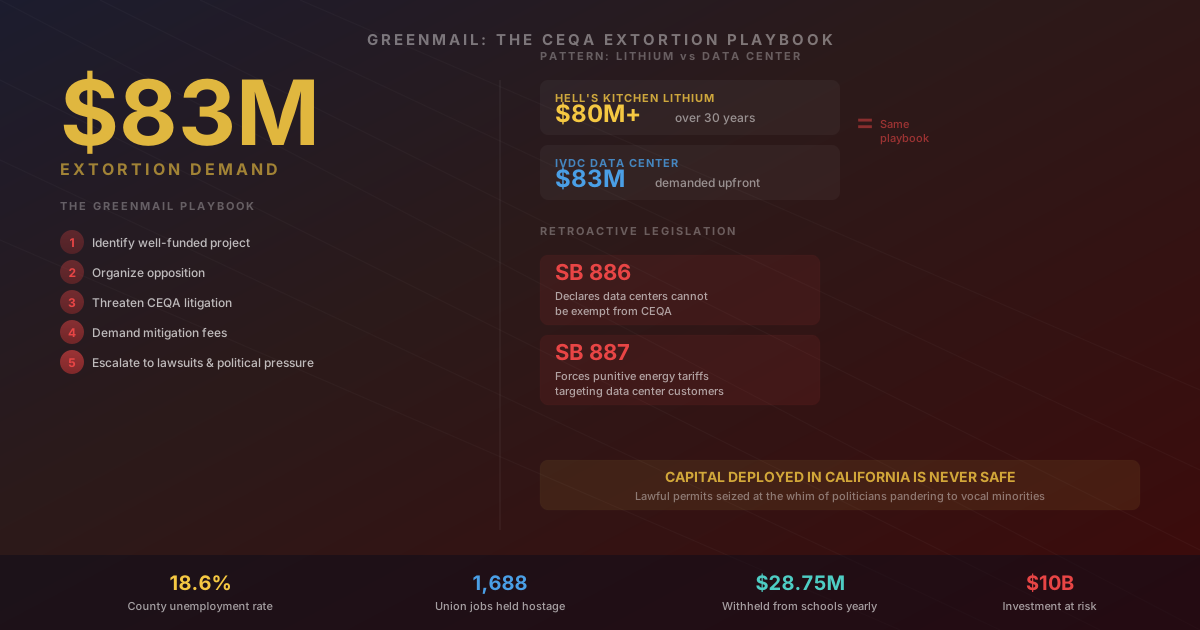
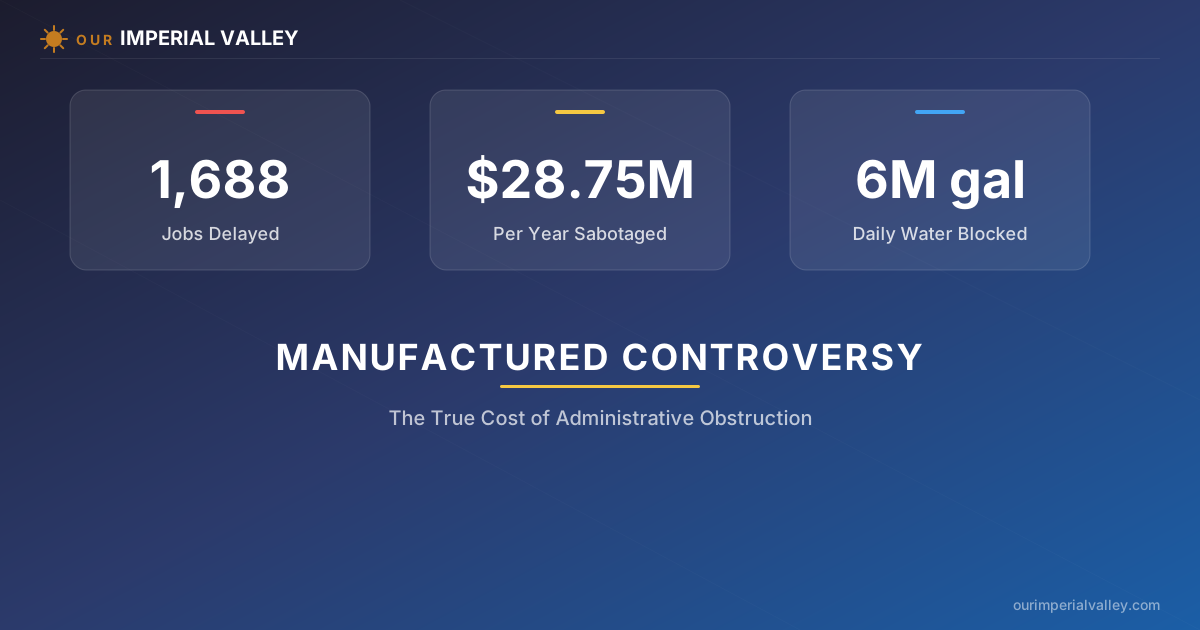
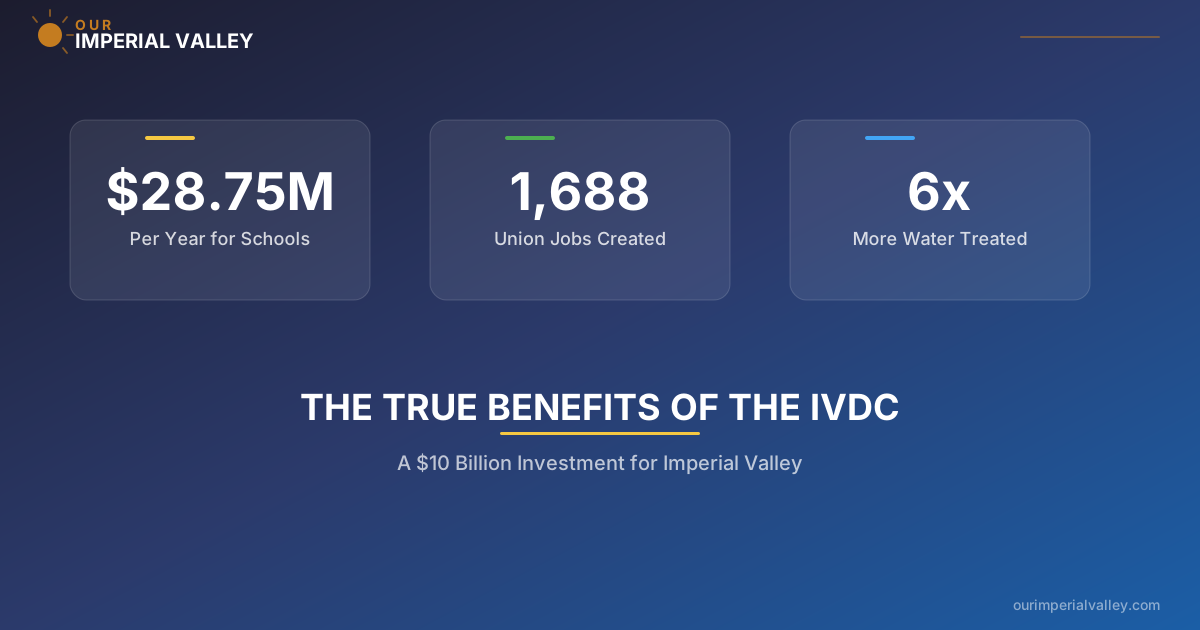
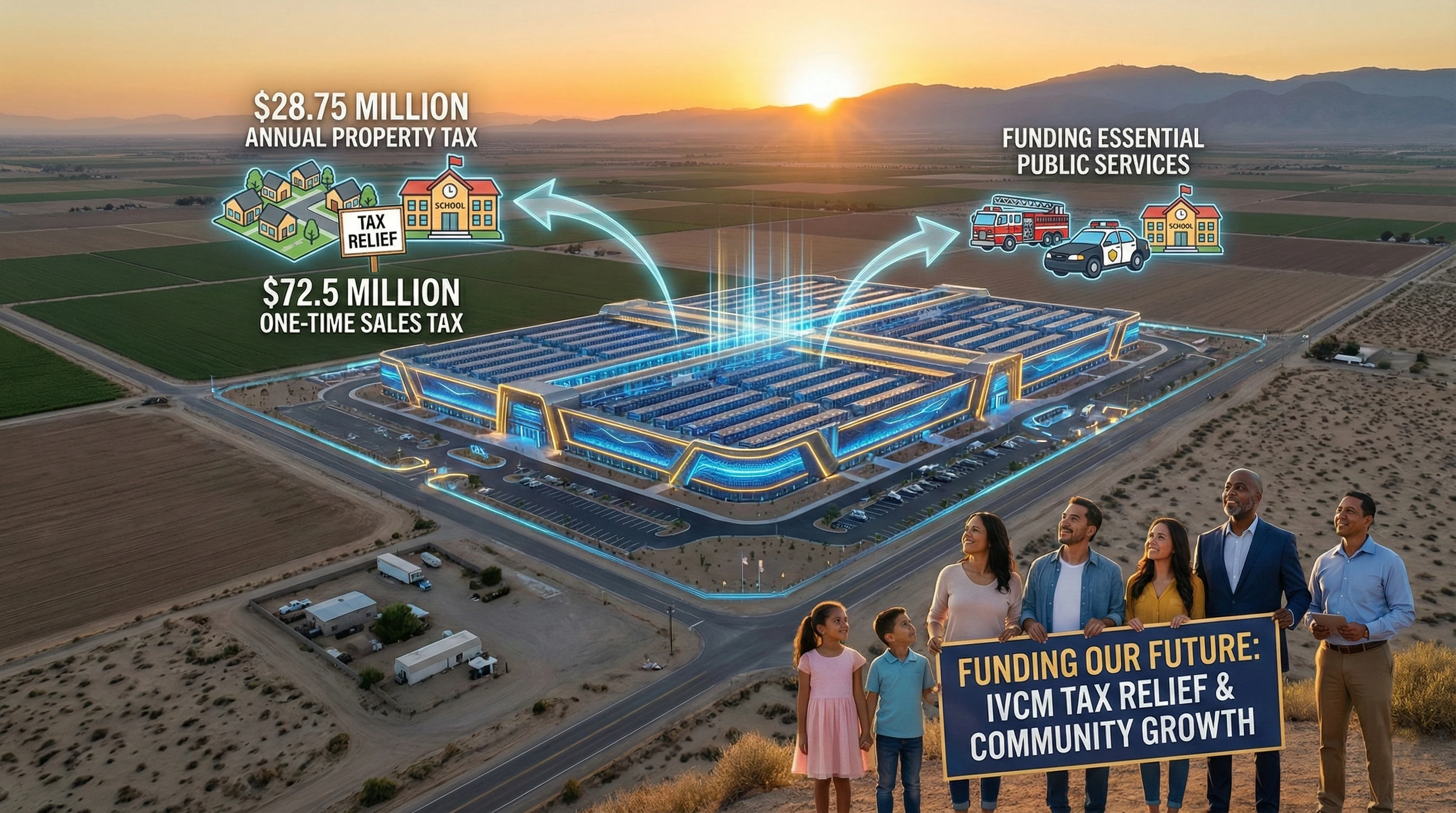
The economic argument is not a argument — it is arithmetic. 1,688 union jobs. $72.5 million in one-time tax revenue. $28.75 million annually thereafter. These are the largest numbers of their kind in Imperial County’s history, from a single project, on land that has been waiting for this use for decades.

What Remains

What remains is an appeal filed by a city that the trial court already ruled against. An appeal that will cost more public money to pursue, add more time to the project’s delay, and arrive at an outcome that the legal framework makes increasingly difficult for the city to win. The appellate court will review the same legal questions the trial court addressed. The by-right zoning doctrine has not changed. The ministerial approval framework has not changed. The Permit Streamlining Act has not changed.

What also remains is a federal civil rights lawsuit that has placed individual officials on notice that the personal financial cost of continued obstruction is no longer zero. The discovery process that lawsuit will generate may produce the documented evidence of coordination and retaliation that the complaint alleges. The officials named in it are making a calculation about whether continued aggressive obstruction is worth the personal exposure it creates.

And what remains is the community’s voice — the residents of Imperial Valley who have the most to gain from this project and who have been largely absent from the public record of a dispute dominated by organized opposition groups, city officials with competing political interests, and a media environment that has given more coverage to the allegations against the developer than to the legal outcomes that dismissed them.

The Time for Waiting Is Over

The County of Imperial has approved this project. The Superior Court has validated that approval. The developer has committed $10 billion in capital, filed a federal civil rights lawsuit to defend the project’s legal rights, and continued to advance development through years of coordinated obstruction.

The people of Imperial Valley have waited long enough. The jobs that would have been filled during these years of litigation are not retrospectively available. The tax revenue that would have been collected is not coming back. The water recycling project that was blocked, the wastewater treatment upgrades that would have benefited El Centro and Imperial, the Salton Sea contributions that would have flowed from an operating facility — none of this can be recovered for the time that has been lost.

What can be recovered is the future. The project is legal. The economic case is overwhelming. The community deserves to have its institutions honor the approval that was lawfully granted and let this project become what Imperial Valley has been waiting for it to be.

The court has ruled. The law is clear. It is time to build.

Imperial Valley’s identity is agricultural. The alfalfa, the vegetables, the cattle — grown in a desert made productive by the engineering marvel of the All-American Canal — are the foundation of a regional economy that has sustained families and communities for generations. The farmworker tradition, the irrigation districts, the processing and logistics infrastructure that moves the Valley’s produce to markets across the continent — these are not relics. They are active economic systems supporting real people.

They are also a foundation, not a ceiling. The same geography that made the Valley ideal for irrigated agriculture — abundant sunlight, geothermal energy beneath the surface, available land — makes it ideal for the technologies of the next economic cycle. The transition from an economy built exclusively on agriculture to one that integrates clean energy, critical minerals, and technology infrastructure is not a departure from the Valley’s identity. It is the next chapter of a community that has always succeeded by working with what the land provides.

What Economic Diversification Actually Requires

Economists who study the long-term trajectory of resource-dependent regions consistently identify diversification as the key variable separating communities that sustain themselves through multiple economic cycles from those that decline when their primary industry contracts. The agricultural economy of Imperial Valley is not in crisis — but the structural pressures on water allocation, on the agricultural labor market, and on the commodity pricing that determines farm profitability are real and long-term.

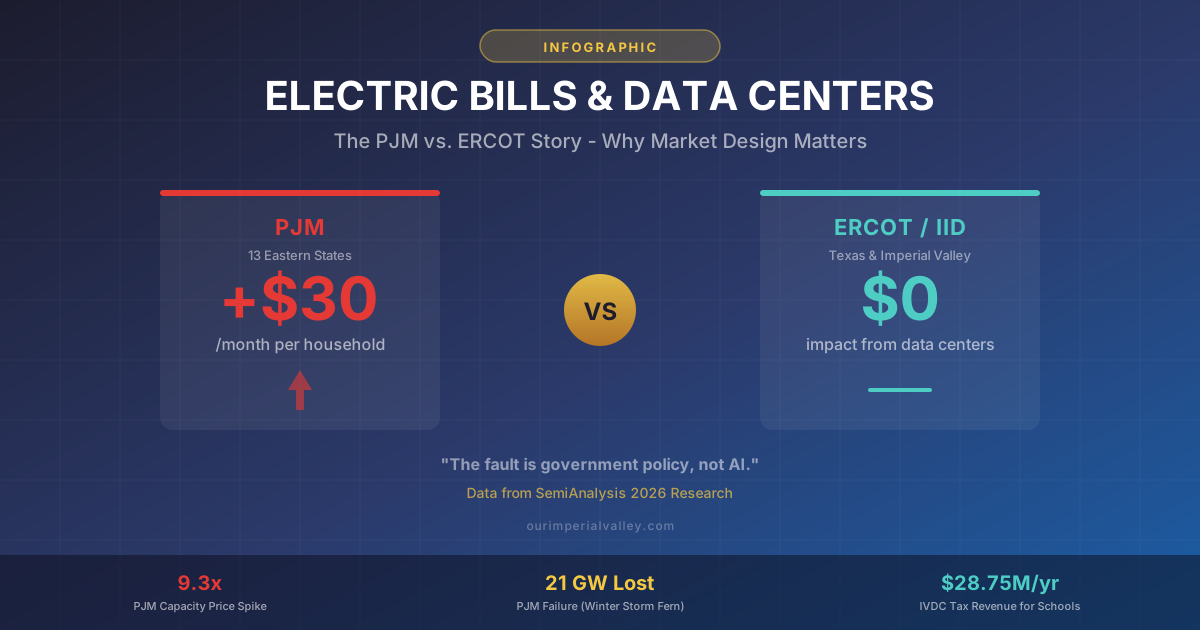
Diversification into clean energy and technology infrastructure addresses these pressures by adding economic sectors that are not correlated with agricultural commodity prices or water availability in the same way that farming is. A data center that employs engineers and technicians, generates $28 million in annual property tax, and provides a stable industrial electricity customer for IID is adding economic diversity that reduces the Valley’s vulnerability to shocks in any single sector.

This is not a novel analysis. It is the standard framework for regional economic resilience planning. What is unusual about Imperial Valley’s situation is the scale and quality of the specific diversification opportunity that the IVDC represents — and the extraordinary extent to which coordinated opposition has worked to prevent the community from capturing it.

The Transition Generation

The workers who would fill the 1,688 union construction positions attached to the IVDC are, in many cases, the children and grandchildren of farmworkers. They grew up in the Valley. They have watched the employment opportunities available to them stay relatively flat while opportunities in neighboring regions have expanded. Many have left for better prospects elsewhere. Many who stayed are working in conditions that are challenging even in good years.

The construction trades offer a specific kind of economic mobility that the agricultural economy, for all its real value, has not consistently provided: union wages, benefits, apprenticeship programs, and the portable credentials that allow a skilled tradesperson to build a career regardless of whether the local economy has a specific project underway at any given moment. An IBEW electrician trained on the IVDC build is an IBEW electrician with credentials that have value across the entire West Coast construction economy.

The transition from agricultural to diversified economy is not a betrayal of the Valley’s working-class roots. It is the fulfillment of the aspiration that those roots represent: that the work of a generation builds something better for the next one. The IVDC is one piece of that fulfillment. Getting it built is how the aspiration becomes real.

The competition between the United States and China for leadership in artificial intelligence is not primarily a technology competition. It is an infrastructure competition. AI capability scales with compute — with the number and quality of AI processors running training and inference workloads. The country that builds more compute, in more secure locations, powered by more reliable energy, establishes a structural advantage that is difficult to overcome through software alone.

The federal government has recognized this. The CHIPS and Science Act, executive orders on AI infrastructure, and Department of Energy investments in data center power infrastructure all reflect a national policy judgment that domestic AI compute is a strategic asset. The question is where that compute gets built — and whether the communities best positioned to host it can create the institutional conditions for it to happen.

Why Location and Power Source Matter for Security

AI training and inference infrastructure that runs on carbon-free baseload power has advantages beyond environmental. Geothermal-powered facilities are not subject to the fuel price volatility that affects gas-fired generation. They are not vulnerable to the weather disruptions that affect solar and wind. They do not depend on long-distance transmission that is subject to physical infrastructure vulnerabilities. A data center running on locally-generated geothermal power, connected to an independent grid, in an inland location away from coastal infrastructure risks, represents a more resilient platform for strategically important compute than facilities dependent on the interconnected and sometimes fragile national grid.

This is not speculative. Grid resilience has become an explicit criterion in federal evaluations of data center suitability for government-adjacent AI workloads. The combination of geothermal baseload, IID’s independent operation, and the BESS that allows the IVDC to ride through grid disturbances creates a resilience profile that dedicated mission-critical computing facilities require.

The Domestic Investment Imperative

Every dollar of data center investment that goes to Ireland, Singapore, or even to states with less developed energy infrastructure represents American AI compute capacity that is less strategically controllable than capacity built in energy-rich domestic locations. The policy goal — which bipartisan consensus in Congress has endorsed — is to bring AI infrastructure investment to American communities where the technical and resource foundations exist.

Imperial Valley meets that description as well as any location in the country. The geothermal resources are unique. The IID grid is independent and domestically controlled. The land is available and appropriately zoned. The workforce is available and motivated. The project has cleared every legal threshold the regulatory system has imposed.

Blocking it — through the kind of coordinated institutional obstruction the IVDC has faced — is not neutral with respect to the national AI infrastructure goal. It is a concrete impediment to building the domestic compute capacity that national policy has identified as a strategic priority. The officials and organizations blocking this project are not making a local land use decision in a vacuum. They are affecting the trajectory of an investment that has national implications.

Discussions about the Imperial Valley Data Center often involve statistics without context. 950,000 square feet. 330 megawatts. 862 megawatt-hours. 75 acres. These are large numbers, and they are cited by both supporters and opponents in ways that often leave the listener without a frame of reference for what they actually mean in practice.

Here is that context, starting with the building itself.

The Physical Scale

950,000 square feet is roughly the floor area of six large Costco warehouses placed end-to-end. It is a large industrial building — the kind of structure that is unremarkable in the context of I-2 Heavy Industrial zoning, which is designed to accommodate exactly this kind of large-footprint industrial use. The site is 75 acres, which provides substantial setback and operational area around the primary structure.

The building is, fundamentally, an industrial facility. It houses rows of computer servers in temperature-controlled halls, along with the cooling, power distribution, and support infrastructure those servers require. From the outside, a hyperscale data center looks like a very large warehouse with more visible mechanical equipment on the roof. It does not look like a power plant, a chemical facility, or a manufacturing operation. It generates no smoke, no chemical waste, no industrial byproducts beyond heat — which the cooling system manages.

The Power Infrastructure

330 megawatts is a large power load. For context: a typical residential household in California uses approximately 6-7 kilowatts of peak demand. 330 megawatts is the equivalent of roughly 47,000 homes. That number sounds alarming out of context. In context, it is a large industrial customer on an IID grid that has existing industrial loads and the generation capacity to serve them.

The key distinction is that the IVDC includes a dedicated 330-megawatt substation — infrastructure the developer builds and pays for — that connects directly to IID’s transmission network without burdening the existing distribution infrastructure that residential customers use. The data center is not drawing power through the same lines that serve homes in El Centro. It is a direct industrial connection at the transmission level.

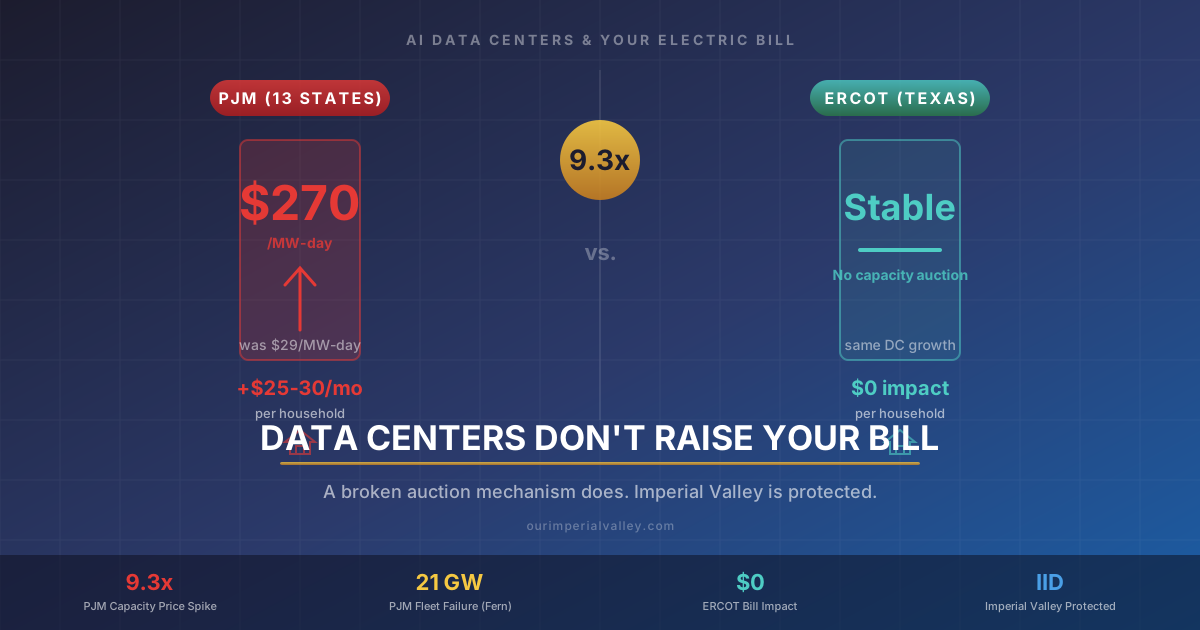
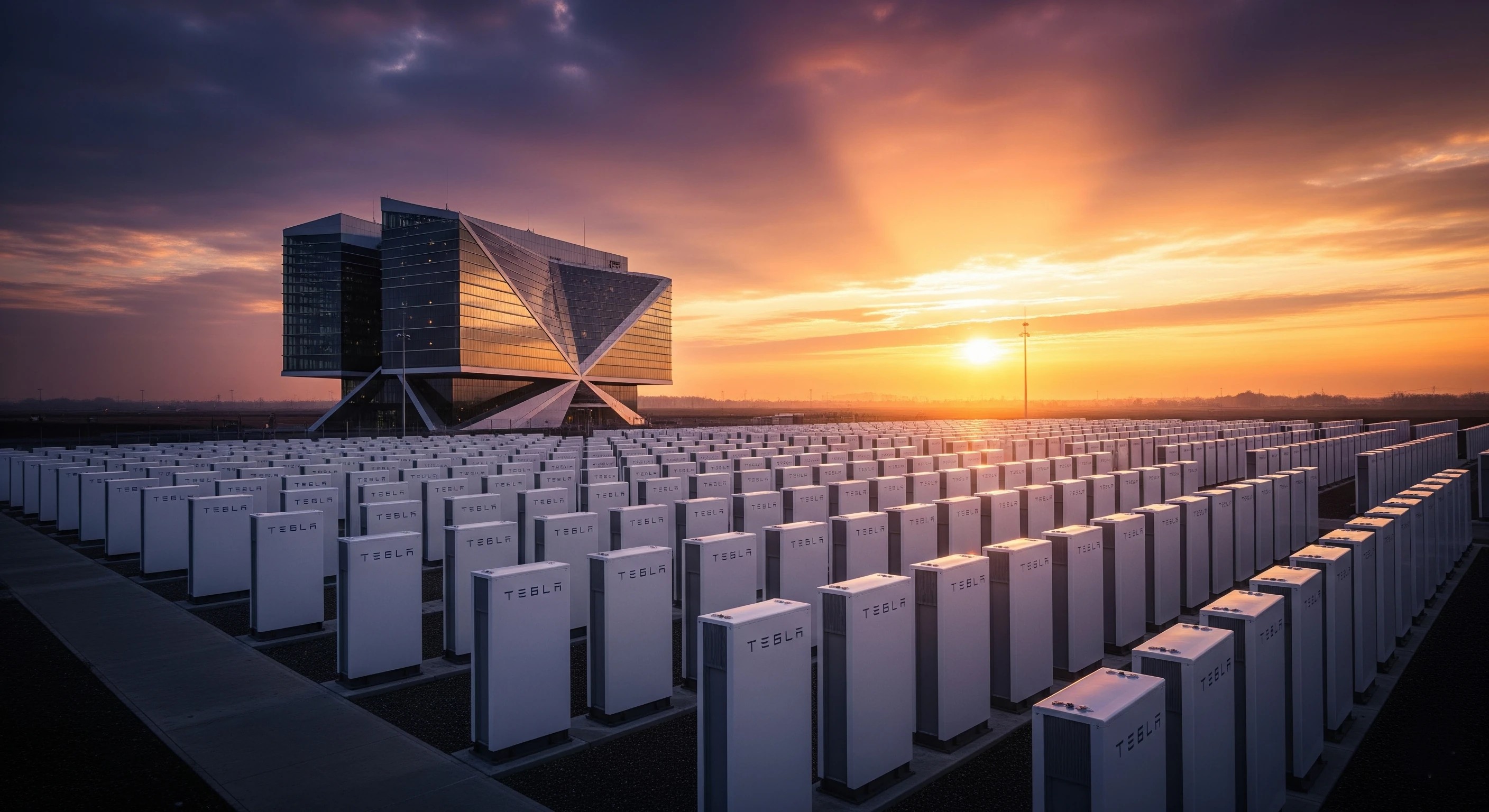
The 862 MWh BESS is the other crucial context. This battery system means the facility does not draw 330 megawatts continuously from the grid. It draws power during off-peak hours to charge the batteries, then runs on battery storage during peak demand. The actual grid impact profile is a large but manageable off-peak load, not a continuous 330-megawatt demand spike.

The Water System

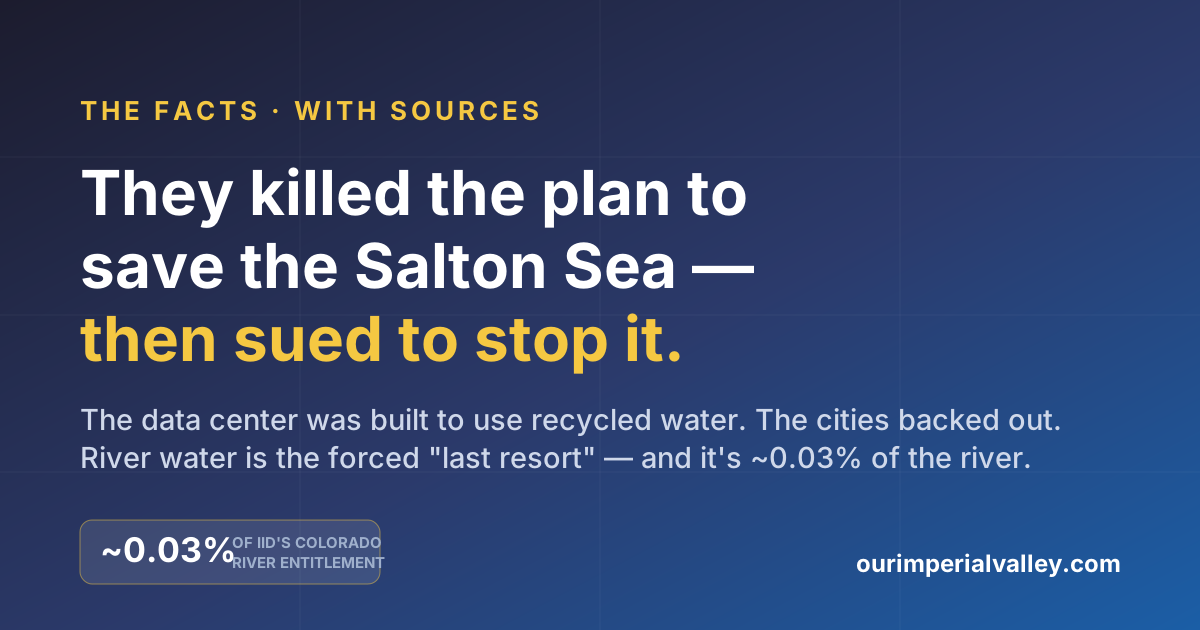
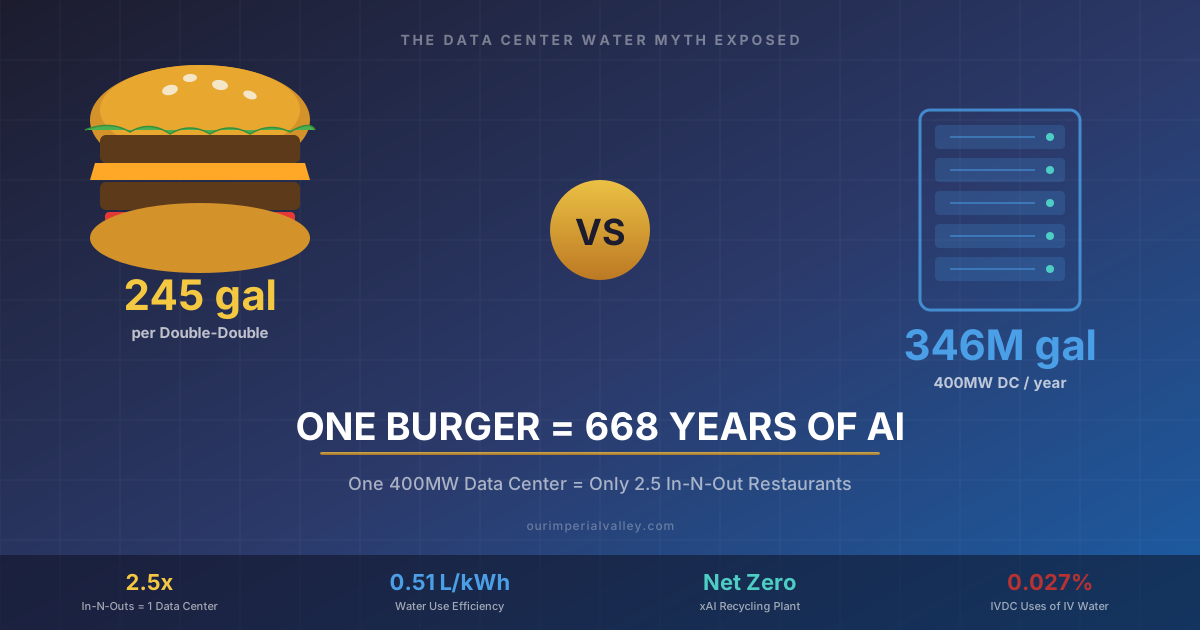
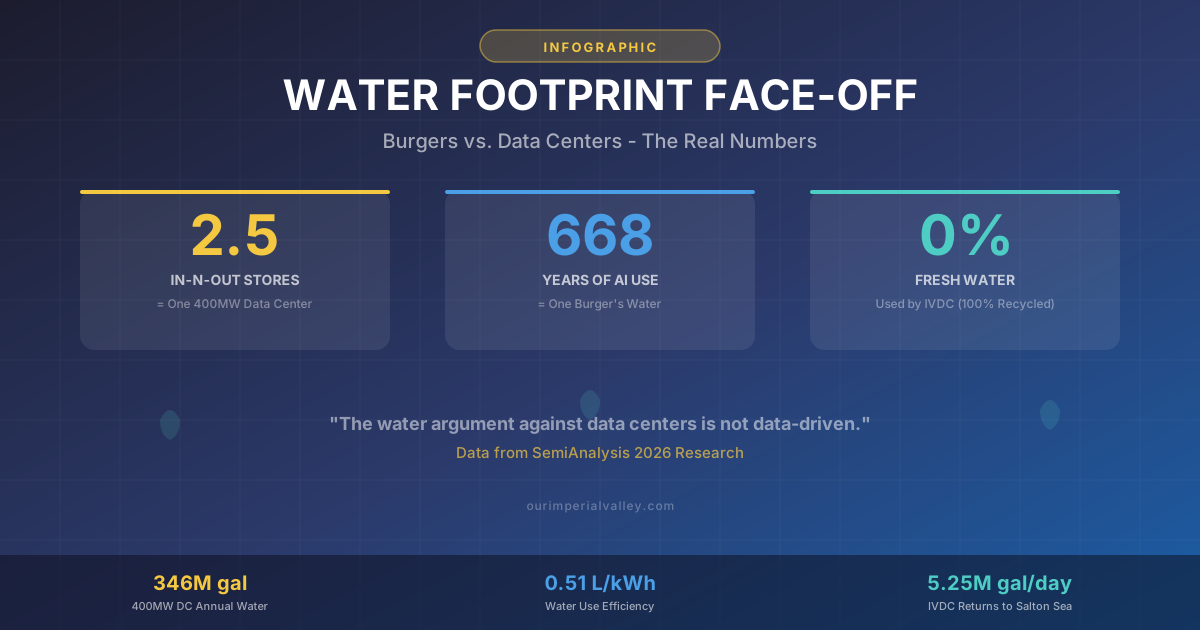
The cooling system for a facility of this size requires substantial water volumes. In a conventional water-cooled data center, this would mean significant potable water consumption — the 750,000-gallon figure that the opposition cites. The IVDC’s design avoids this entirely by using recycled municipal wastewater in a closed-loop system. The water is not drawn from the Colorado River or from potable supplies. It is treated effluent that municipal plants currently manage as a disposal challenge.

Physically, this means purple-pipe infrastructure running from municipal treatment facilities to the data center site — the same kind of reclaimed water distribution infrastructure that irrigation systems and industrial parks across California already use. The water goes into the cooling system, cycles through the facility, and the excess returns to the treatment cycle rather than being consumed or discharged as waste.

What the Facility Is Not

The IVDC is not a power generation facility. It does not produce electricity; it consumes it. It is not a chemical processing facility. It handles no hazardous materials beyond the standard industrial chemicals used in cooling systems. It is not an extraction operation. It does not mine, drill, or excavate. It is not a manufacturing plant. It produces no physical product.

It is a large industrial building that houses computer servers and the infrastructure to power and cool them. In the context of I-2 Heavy Industrial zoning — designed for exactly this class of industrial use — the IVDC is the intended occupant of the land it sits on. The scale of the numbers involved is real, but the nature of the use is precisely what the zoning framework was designed to accommodate.


Data Centers Don’t Belong on the Coast. They Belong in Imperial Valley.

The data centers that train AI models, store the world’s information, and process real-time applications cannot be built in Silicon Valley. The land is too expensive. The power grid is too constrained. The regulatory environment is too complex. The physical infrastructure required for a 950,000-square-foot data campus has to go somewhere that has sufficient land, sufficient power, and sufficient grid capacity — and in California, that somewhere is not the coast.

Imperial Valley is the most technically optimal data center location in California that also has available industrial land and sufficient grid capacity. This is not a promotional claim. It is a technical assessment based on the specific requirements of hyperscale data center development. The region has geothermal baseload generation, an independent utility system, I-2 industrial land at costs measured in thousands rather than millions of dollars per acre, and a workforce that can staff both the construction and the operation of large industrial facilities.

Why the Tech Industry Moved to Rural America

The geographic shift of data center development from coastal urban areas to rural inland locations has been underway for two decades. Google’s decision to build in Dalles, Oregon — a small city on the Columbia River with cheap hydroelectric power — was one of the early inflection points. Microsoft’s Quincy, Washington campus followed. Amazon’s facilities in rural Iowa, Facebook’s in rural New Mexico, Apple’s in Nevada. The pattern is consistent: abundant, affordable power in locations where large-scale industrial construction is practical.

These rural communities have been transformed by the investment. The tax revenue alone — from facilities that occupy relatively little land but generate substantial assessed value — has restructured local government finances in ways that took decades to approach through any other economic development strategy. The construction employment sustained local trades through multiple business cycles. The permanent operational employment provided high-wage jobs in communities where the alternative was agricultural and service work.

Imperial Valley is the California version of this opportunity. The geography works. The technical requirements are met. The economic need is as great as anywhere the industry has gone. The obstacle is not technical or financial. It is institutional.

Coastal Regulation, Inland Consequences

There is an irony in the current opposition to the IVDC that deserves explicit recognition. The environmental and land use regulations that make coastal California inhospitable to large industrial development are the same forces that make Imperial Valley the technically correct location for that development. CEQA, local opposition, regulatory complexity — these are the mechanisms that pushed industrial investment inland, to exactly the kinds of communities that need it most.

And now those same mechanisms are being deployed in Imperial Valley, against an industrial project on industrial land that represents the economic development opportunity the community has been waiting for. The opposition that makes the coast hostile to data centers is replicating itself in the one place where data center development could genuinely transform a region’s economic prospects.

Imperial Valley does not have to accept this replication. The court has ruled the project is legal. The county has approved it. The community has an opportunity to demonstrate that the mechanisms that defeated industrial development on the coast will not be allowed to defeat it in the one place in California where the economic and technical case for it is most compelling.

Every major technology infrastructure investment decision involves a site selection process. Engineers evaluate geology, climate, and technical constraints. Finance teams model power costs, labor markets, and tax structures. Legal teams assess the regulatory environment and the political risk of organized opposition. Real estate professionals evaluate land availability and pricing. All of this analysis feeds into a decision that is, ultimately, about one question: where is the expected cost and risk of development low enough that the investment makes sense?

The IVDC is being watched by every site selector who has California on a short list. Not because the specific project is important to them, but because what happens to it tells them something accurate and specific about the California development environment that no amount of promotional material can override.

If the IVDC — a by-right project on appropriately zoned industrial land, approved by the county, validated by the Superior Court, with a closed-loop water system and a dedicated substation — gets blocked by coordinated legal and political obstruction, the message to site selectors is clear: California by-right approvals are not reliable. Industrial zoning does not guarantee development rights. Organized opposition can defeat a legally sound project regardless of legal merit.

That message, once established, is very difficult to reverse.

The Competition That California Is Losing

Arizona, Nevada, and Texas are the primary beneficiaries of California’s data center development challenges. They have cheaper land, more predictable regulatory environments, lower construction costs, and — in many cases — comparable power availability from renewable sources. Phoenix, Las Vegas, and North Texas have absorbed billions of dollars in data center investment over the past decade that might have gone to California communities with comparable or better technical advantages.

Imperial Valley has a genuine competitive argument against these locations: geothermal baseload power, IID’s independent grid, and I-2 zoned industrial land at a fraction of coastal California prices. Those advantages are real and they are significant. But they are only relevant if the development environment is functional — if a developer who secures ministerial approval on by-right industrial land can actually build without five years of litigation by opponents the courts describe as legally insufficient.

The Stakes for Imperial Valley Specifically

For communities in Arizona, Nevada, and Texas that are successfully attracting data center investment, the economic consequences are visible: construction activity, permanent operational employment, property tax revenue, and the supply chain spending that supports local businesses and contractors. Imperial Valley has been watching other communities capture this investment cycle for over a decade while its own development opportunities have been repeatedly complicated by the institutional environment the IVDC fight has documented.

The signal the IVDC sends is not just about this project. It is about whether Imperial Valley is the kind of place where investment commitments are honored, where legal frameworks mean what they say, and where the outcome of a development process is determined by law and engineering rather than by which coalition can sustain litigation the longest.

The community has a stake in establishing that answer as yes. The mechanisms for doing so are the legal process, the political process, and the sustained public accountability that ensures the people blocking this project bear some of the cost of doing so.

The concept of vertical integration — controlling multiple stages of a production or supply chain within a single geographic and institutional framework — creates efficiencies and competitive advantages that distributed operations cannot replicate. What Imperial Valley has, if it allows the IVDC to proceed alongside the Lithium Valley development underway, is the beginnings of a vertically integrated clean energy and technology campus that does not exist at scale anywhere else in the United States.

Let’s trace what that looks like in practice.

Stage One: Geothermal Generation

The geothermal plants already operating in the Salton Sea region produce continuous, carbon-free electricity from the volcanic heat beneath the Valley floor. This generation is baseload — it runs at full capacity around the clock regardless of weather, season, or time of day. It does not require storage to be useful because it is always available. For an AI data center that needs to run multi-day training jobs without interruption, geothermal baseload is the ideal power source.

Stage Two: Lithium Extraction

The same geothermal brine that drives the power plants contains dissolved lithium in concentrations that make commercial extraction viable. CTR and its competitors are developing the direct lithium extraction technology that would pull lithium from the brine stream during the geothermal power generation process — producing both power and battery-grade lithium from the same resource, at the same facility, with minimal additional environmental footprint.

The lithium goes into batteries. Some of those batteries could go into the 862 MWh BESS at the IVDC. The BESS stores geothermal power during off-peak periods and discharges during peak demand — integrating the storage function with the generation and the compute functions within a coherent geographic and logistical network.

Stage Three: AI Compute

The IVDC is the anchor tenant for the compute function. It consumes the geothermal power directly. It benefits from the grid stability that the BESS provides. It creates the industrial demand base that makes additional geothermal investment economically viable — because a large, stable, long-term power customer makes the financial model for new geothermal development more attractive to investors.

In a mature version of this ecosystem, the data center’s power is locally generated, locally stored, and locally managed. The transmission losses that plague long-distance power delivery are eliminated. The grid instability that makes renewable power problematic for industrial users is addressed by on-site storage. The carbon footprint of AI compute — a growing concern for both technology companies and their customers — approaches zero.

What This Requires to Become Real

The vertically integrated energy-AI campus is not science fiction. Every component of it either exists already (geothermal plants, BESS technology, data center design) or is in active development (direct lithium extraction). The geography is correct. The resource base is real. The technology is proven.

What it requires is an institutional environment that allows large capital projects to proceed through their approved development timelines without being derailed by coordinated legal obstruction. The IVDC is the first major test of whether Imperial Valley can provide that environment. If it can, the ecosystem has a starting point. If it can’t, the components will find their way to other geographies where the institutional environment is more conducive to completion.

The opportunity is genuinely rare. The community’s ability to seize it depends on getting the IVDC right.

The global competition to build AI infrastructure is, at its base, a competition for electricity. The models that power AI applications — large language models, computer vision systems, recommendation engines — require enormous computational resources to train and run, and those computational resources require enormous amounts of power to operate. The race to build hyperscale AI infrastructure is, in practical terms, a race to find sufficient electricity in sufficient quantities in locations where large-scale construction is feasible.

This race is being run by every major technology company in the world, and by national governments that have recognized AI capability as a strategic priority. The United States, China, the European Union — each is investing in the infrastructure that will determine which nations and which companies lead the AI economy of the next decade.

Imperial Valley is positioned to be part of the American answer to that competition. It has the power. It has the land. It has the grid independence. What it currently lacks is the institutional alignment that allows these advantages to be converted into actual data center construction.

The Power Math

A competitive hyperscale AI training facility operates in the hundreds of megawatts. The IVDC is designed for 330 MW — substantial, but not unusual for the current generation of AI infrastructure investment. Microsoft, Google, Amazon, and Meta are each committing to data center campuses of this scale and larger. The question for site selection is always the same: where is there 300+ megawatts of available, affordable, reliable power with a viable path to interconnection and development?

In California, the honest answer is very few places. CAISO territory is constrained. Coastal locations are expensive. The regulatory environment for large industrial users in populated areas is challenging. Imperial Valley, with IID’s independent grid and geothermal baseload capacity, is one of the genuinely available answers to that question in the entire state.

The IVDC is not just one data center. It is a proof of concept for the viability of Imperial Valley as a data center hub. If it gets built, site selectors will look at the region differently. If it gets blocked, they will draw conclusions from that too — and those conclusions will affect how much of the AI infrastructure buildout lands in California versus in friendlier jurisdictions.

The National Competitiveness Dimension

AI infrastructure is not a private sector vanity project. It is the computational substrate of the next industrial economy. The nations and regions that build it will host the companies that lead it. The communities that attract data center investment will have the jobs, the tax revenue, and the economic momentum that come from being part of the technology supply chain.

Imperial Valley — one of the poorest counties in California — has the natural endowments to be part of this story. The geothermal power resource. The independent grid. The industrial land. The workers who need the jobs. Getting from that potential to that reality requires clearing the obstacles that the current legal and political campaign has placed in the path of a project that has already cleared every legal hurdle the system is supposed to impose.

This shouldn’t be complicated. The land is zoned. The approval was given. The courts have ruled. The opposition has failed at every legal test. The AI infrastructure needs to be built somewhere. Imperial Valley is one of the best places in America to build it. Let it happen.

The headlines write themselves. A nightclub raid in Youngstown. An FBI seizure in California. A developer with a “checkered past” trying to build a $10 billion data center in the middle of the desert.

If you’ve read the KPBS coverage of the Imperial Valley Data Center, you know the story their reporting wants you to believe: Sebastian Rucci is a shady operator, and the opposition to his project is righteous civic concern.

Here is what that story leaves out: Rucci won. Every time.

The Ohio Case

In 2010, Youngstown authorities charged Rucci with money laundering and promoting prostitution at his “Go Go Girls Cabaret.” The charges were serious. The prosecution was not. The major felony charges were dismissed. The case collapsed. The government failed to sustain the core allegations against a man running a legal business in a form that local authorities found objectionable enough to raid but not criminal enough to prosecute to conviction.

The search warrants were challenged and upheld on narrow technical grounds — meaning the technical paperwork cleared the bar, but the underlying criminal conduct the warrants were supposed to support was never proven. That is the distinction that matters. Warrants can be technically valid while the investigations they authorize ultimately fail to establish criminal conduct. In this case, they did.

The Federal Funds Return

In 2021, the FBI seized $600,000 from California Palms. The state revoked the facility’s certification. No criminal charges were filed. Rucci sued the federal government for return of the seized funds. In 2024, the Department of Justice voluntarily returned the $600,000 — with interest. The Sixth Circuit ruled in Rucci’s favor on his right to examine the sealed affidavits that had justified the raid.

The federal government, which has unlimited resources and institutional resistance to acknowledging error, chose to give the money back and let the appellate court require it to explain itself. That is a specific set of institutional responses that agencies make when they have determined their legal position cannot be sustained.

What the Complete Record Shows

Read in full — not in the curated version that the opposition’s media allies have circulated — Rucci’s legal history is a record of aggressive government action that failed to produce convictions, charges, or sustained legal findings against him. The government tried. In Ohio, locally. In California, federally. Each time, the legal outcome ran the other way.

The narrative the opposition is selling — that this history disqualifies Rucci from building in Imperial Valley — requires treating the allegations as dispositive while treating the outcomes as irrelevant. That is not how the legal system works. Charges are accusations. Dismissals, returned funds, and appellate victories are outcomes. Outcomes are what count.

The people of Imperial Valley deserve to evaluate this developer on the basis of what the courts and the legal system have actually found — not on the basis of allegations that the legal system ultimately rejected. The complete record is not the “checkered past” the opposition describes. It is something more specific: a record of a person who fights government overreach through the legal system and wins.

In a project fighting government overreach through the legal system, that record is a relevant qualification — not a disqualifying liability.