
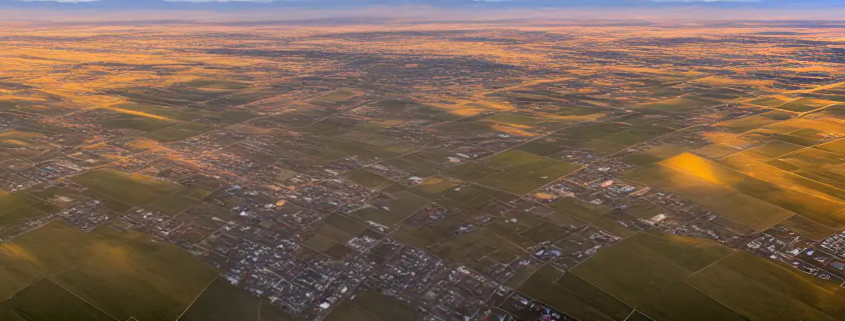
Silicon Valley is full. The land is expensive, the power grid is constrained, and the water is scarce. The hyperscale data centers that train AI models and process the world’s information can’t be built there at any price that makes economic sense. So the industry moved — to eastern Washington, rural Iowa, West Texas, northern Virginia — to places that have abundant land, access to power, and room to build at scale.
Imperial Valley has all of those things. It also has something most of those competing locations don’t: a geothermal energy resource that can power next-generation AI infrastructure with zero-carbon electricity, and a local workforce that needs the jobs badly enough that you don’t have to offer equity packages to fill construction crews.
The question is not whether the Imperial Valley Data Center is a good fit for this region. The question is whether this region will make the institutional choices necessary to capture the opportunity.
The National Pattern
Microsoft’s data center campus in Quincy, Washington transformed a small agricultural community into one of the most significant technology infrastructure hubs in the world. Google’s data centers in rural Iowa have generated hundreds of millions of dollars in local tax revenue and created thousands of construction and operational jobs in counties that had no realistic alternative economic development path. Meta’s facility in Prineville, Oregon became the economic anchor of a community that had watched its timber industry collapse.
In each of these cases, the pattern was similar: a region with cheap land, reliable power, and a workforce hungry for industrial-wage employment received a major technology infrastructure investment that restructured its local economy. The counties that said yes to these projects — and fought for them against the inevitable opposition — transformed their fiscal positions, their school systems, and their residents’ economic prospects.
The counties that said no, or whose institutional resistance made approval too costly and slow, are still waiting for the next opportunity. Some are still waiting.
What Imperial Valley Has That Others Don’t
Imperial Valley’s energy infrastructure is unusual. The Imperial Irrigation District operates an independent grid — not subject to CAISO transmission constraints, not dependent on the same overloaded southern California infrastructure that limits development in coastal communities. IID has generation capacity and the ability to accommodate major new industrial loads in ways that grid-dependent utilities cannot.
The region sits on one of the world’s most significant geothermal resources. The same Salton Sea brine that carries the lithium that Lithium Valley developers are racing to extract also carries thermal energy that can generate baseload renewable electricity at industrial scale. A data center campus co-located with geothermal generation creates a vertically integrated energy-compute stack that no coastal California location can replicate at any cost.
Add the I-2 heavy industrial zoning that makes the specific IVDC site legally available by right — without the discretionary reviews and community approval processes that add years and tens of millions to comparable projects in other jurisdictions — and the case for Imperial Valley as a premier data center location is not just plausible. It is compelling.
The Cost of Saying No
Rural communities that block major industrial investment don’t return to a neutral baseline. They return to a trajectory of gradual fiscal deterioration, population loss, and declining public services. The young people who leave for better opportunities don’t come back. The businesses that serve a working population contract. The tax base erodes, which reduces services, which accelerates outmigration, which further erodes the tax base.
This is not speculation. It is the documented history of dozens of rural California communities that didn’t diversify their economic base before their primary industry contracted. Imperial Valley has managed to sustain itself on agriculture longer than many comparable regions, but the structural pressures are identical.
The IVDC is not the only economic development opportunity the Valley will ever see. But it is the largest one currently on the table, and it has already cleared the most significant legal and regulatory hurdles. The people organizing to block it have not identified what they think should come instead. That is a significant omission, and the residents who would benefit from the project deserve to ask for an answer.